Markets
Market environment
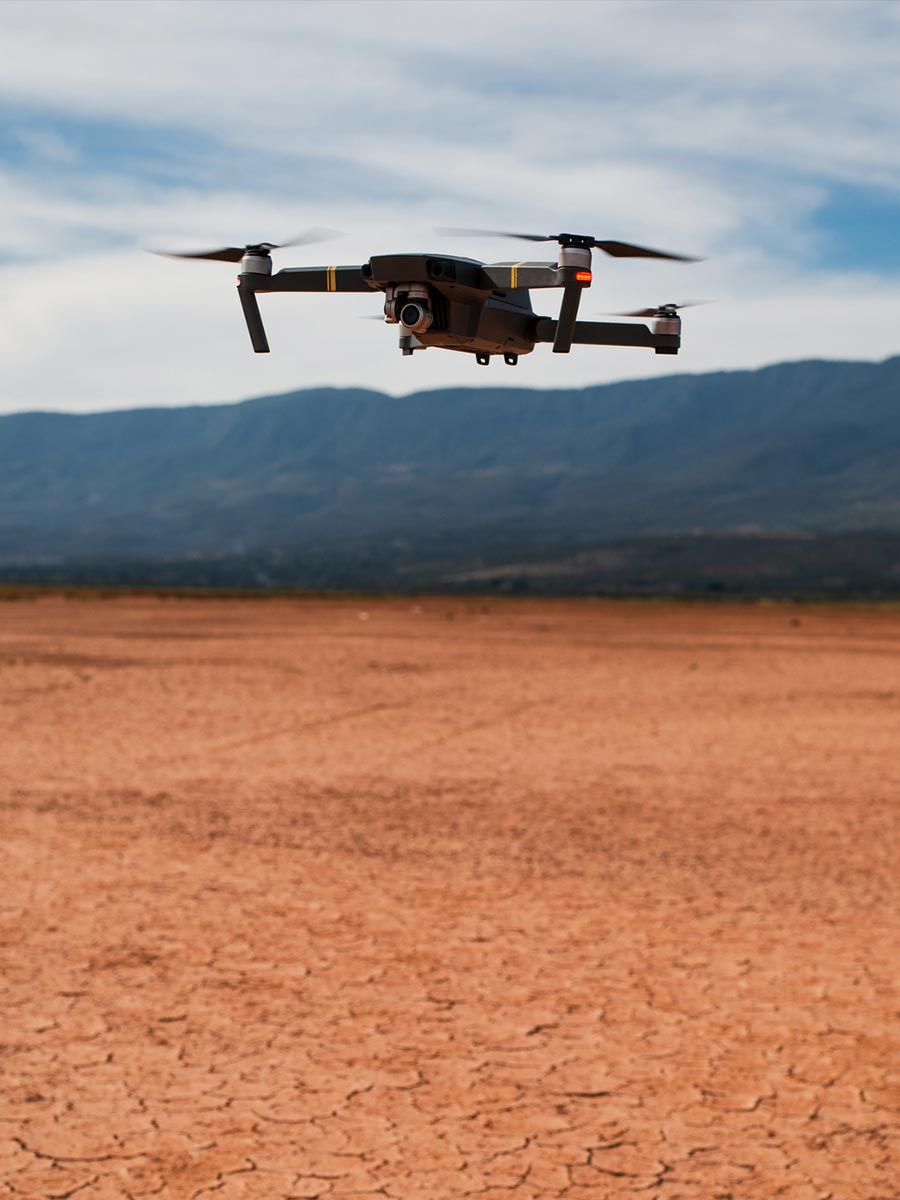
Sensofusion operates in the global C-UAS product market, which is part of the broader defense industry market. The global C-UAS product market, covering both the defense and civil markets, was approximately EUR 4.4 billion in 2025¹. Historically, the market has grown strongly, at a CAGR of approximately 32 percent between 2020 and 2025 and it is expected to reach EUR 15 billion by 2030. Growth has been driven in particular by the outbreak of Russia’s war of aggression in Ukraine in 2022, which significantly increased demand and accelerated market investment and procurement needs.¹
Sensofusion currently has operations in three key geographic market areas: North America, Europe and the Middle East and North Africa (MENA) regions. The company currently operates in five countries: Finland, the United Kingdom, Ukraine, Israel and Canada.
¹ Source: Third-Party Market Study.
Forecasted size and growth of the global drone detection and counter-drone market, distribution by defense and civilian applications¹
EUR billion
¹ Source: Third-Party Market Study.
Customers
Sensofusion’s customer base consists primarily of leading international defense and security customers, such as armed forces and other national security authorities in various countries, which procure the company’s C-UAS products as part of their own defense and security capabilities. In addition, Sensofusion has civil customers, including public sector entities, critical infrastructure operators and law enforcement authorities, which use the company’s products to protect assets, such as energy production and distribution facilities, ports and airports.
Revenue distribution by customer type in 2025¹
EUR million
¹Audited
Revenue distribution by geographic region in 2025¹
EUR million
¹Audited
Competitive landscape
Sensofusion’s competitive landscape consists of several types of players, whose strengths vary across research and product development speed, cost efficiency, delivery capability, and customer proximity. Sensofusion competes with traditional defense industry prime contractors, rapidly growing software-driven companies, and providers focused on comprehensive C-UAS solutions.
According to the company's management, Sensofusion’s strong competitive position is based on its ability to combine the rapid research and product development and innovation speed typical of software-defined players with a cost-efficient and scalable product portfolio and a rapidly expanding commercial and industrial delivery capability. In addition, in the company’s assessment, direct end-customer relationships and a vertically integrated operating model support rapid research and product development, responsiveness to customer needs and the scaling of products at an increasing scale.