Sensofusion’s strenghts
Strong position in a significantly growing market add
According to Sensofusion's management, Sensofusion is a successful¹ player in the fast-growing C-UAS product market, supported by several structural growth drivers in both defense and civilian applications. According to a third-party market study, the global C-UAS product market is at the beginning of a long-term investment wave. The C-UAS product market is expected to grow by approximately 29 percent annually between 2025 and 2030, taking into account both defense and civil applications.² In particular, within the defense market, C-UAS solutions have become a strategic priority, and the defense market is forecast to grow from approximately EUR 2.7 billion in 2025 to approximately EUR 10.2 billion in 2030, and to approximately EUR 15.3 billion in 2035.
¹Sensofusion has a significant geographic presence in both Ukraine and the Middle East, and the company also estimates that it has one of the market’s most comprehensive detection libraries.
²Source: Third-party market study.
Pioneer in C-UAS innovation add
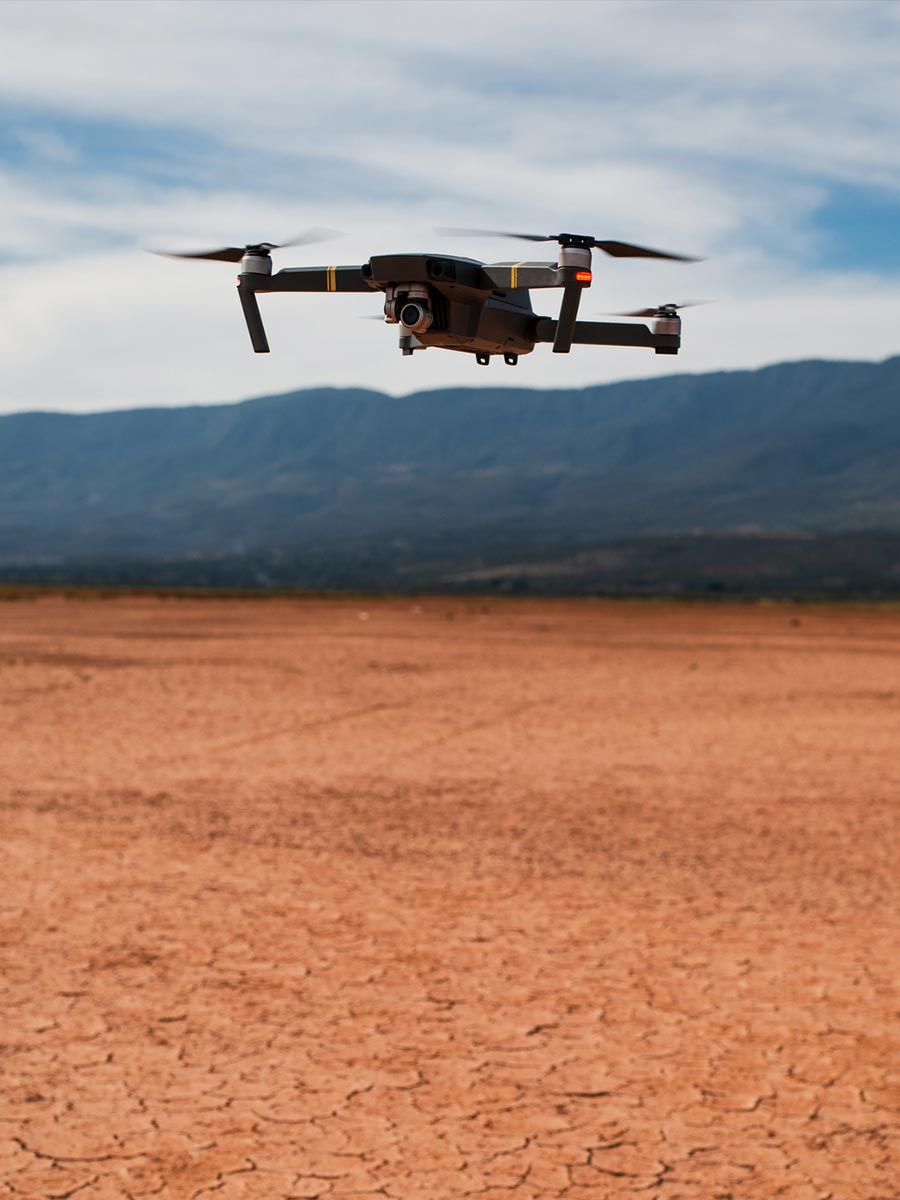
In the view of Sensofusion's management, the company is one of the pioneers in C-UAS technology. Its competitive advantage is based in particular on its ability to develop, test, update and commercialize new C-UAS products rapidly and efficiently. The company has more than ten years of experience in developing C-UAS technology, and its product portfolio has evolved from individual detection products towards a comprehensive detect-to-defeat chain, covering the detection, location, identification, threat assessment and defeat of drones.
Direct end-customer relationships and a vertically integrated business model add
Sensofusion has succeeded in building strong prime relationships with defense and government customers. Prime relationships consist of large-scale, established customer relationships with major defense sector customers who typically procure solutions to build long-term sovereign defense capability. The company’s prime customer relationships include, among others, NATO country defense forces and other key defense industry players. The company independently controls key parts of the value chain, including self-funded research and product development, software, hardware, production, testing, customer engagement, and field support.
Battle-proven performance and a continuous improvement cycle add
The company's management believes that the battlefield-proven performance of Sensofusion's products is one of its core strengths. The company’s products have been used in active conflicts since 2018, including in the Middle East in recent years and in Ukraine since February 2022. The company currently has hundreds of systems in operational use across several conflict zones. Its systems have accumulated approximately 37,000 operational hours since 2022, and its systems detect approximately 8,000 drones per day. Sensofusion has carried out approximately 270 over-the-air software updates since 2022, some of which have corrected errors and ensured that delivered products continue to meet the product specification agreed at the time of sale in a constantly changing threat environment.
Strong financial profile and value creation roadmap add
The company’s financial profile is strong, and it has been able to combine rapid revenue growth, high profitability, strong cash flow, and a capital-efficient business model. Sensofusion’s revenue has grown in recent years. Reported revenue has increased from EUR 7.2 million in 2023 to EUR 49.4 million for the last twelve-month period ended 30 June 2026. The company’s contribution margin was 86.8 percent for the last twelve-month period ended 30 June 2026. Over the same period, the company’s operating profit margin was 60.8 percent.
Sensofusion’s ability to grow rapidly while maintaining high profitability has been based on a business model in which a significant part of the value is created by software and AI rather than by the hardware it sells. The company’s value creation model also enables a production model in which Sensofusion can rapidly scale its production according to demand while maintaining a relatively low capital requirement. For the last twelve-month period ended 30 June 2026, the company’s adjusted return on capital employed (ROCE) was 277.8 percent and its cash conversion was 87.2 percent, reflecting the company’s ability to convert profitable growth into cash flow in a capital-efficient manner.